June 18, 2026
Decoding Your Style: The First Step to a Zero-Waste Wardrobe
 Maria Macklin | Read in 3 minutes
This is a game-changer. When you don't know your personal style or what colours actually look good on you, you fall victim to the "trend cycle trap." You buy items that are high quality, ethically made or even second-hand, but they sit in our closets with the tags still on because they make us feel washed out or uncomfortable.
Knowing your unique style profile and colour palette is actually the ultimate form of sustainable fashion defence. That needs to be front and centre.
You’ve been told that being an eco-conscious shopper just means buying organic cotton, shopping second-hand, buying local or stopping shopping altogether. True sustainability is not just about how a garment is made—it’s about educating yourself on whether you’ll actually wear it.
If you buy a €200 ethically made, 100% silk dress, but the silhouette doesn't fit your body type, the style doesn’t honour your personality, and the neon orange completely washes out your skin tone... it’s going to sit in your closet forever. That isn't sustainable.
Real sustainability requires self-education. It’s about doing the work to discover your unique style profile and your personal colour palette. When you know which colours make your skin glow and which silhouettes make you feel confident, you’ll stop buying random trend pieces that you’ll discard next month.
Here are 9 myths you need to leave behind.
Ignoring your colour palette: A high-quality, ethically made, or second-hand dress is useless if the colour washes you out and makes you feel self-conscious. Knowing your personal colour palette prevents wardrobe orphans.
Ignoring your unique style profile: If you don't know your silhouette, lifestyle needs, and style archetype, you will keep buying pieces that look great on influencers but sit in your closet with the tags on.
An expensive aesthetic: It’s not defined by neutral beige, minimalism, or linen dresses. Your sustainable style can be colourful, maximalist, or edgy—as long as it’s uniquely yours.
Shopping without a shopping list: Know what you have and what you haven’t. Always do a wardrobe stock-take before you go shopping. Fill the gaps, rather than duplicate.
Blindly following trends: Real sustainability means stepping off the trend treadmill. Buying an item just because it’s trending ensures it will end up in the donation bin by next season.
Just checking for an "eco" label: Greenwashing is real. True sustainability requires inspecting the construction—checking for tight seams, strong hemlines, and garments built to survive 50+ washes.
An all-or-nothing sport: You don’t need a 100% plastic-free, ethically sourced wardrobe to make a difference. Millions of people buying less and wearing clothes longer is infinitely better than perfection.
Assuming price equals sustainability: Just because a brand is expensive doesn't mean it’s ethical or high quality. Conversely, keeping a fast-fashion item in your rotation for years is incredibly sustainable.
Solely your burden to bear: Individual choices matter, but sustainability isn't just a personal consumer choice. It’s also about demanding systemic change and holding major fashion corporations to account.
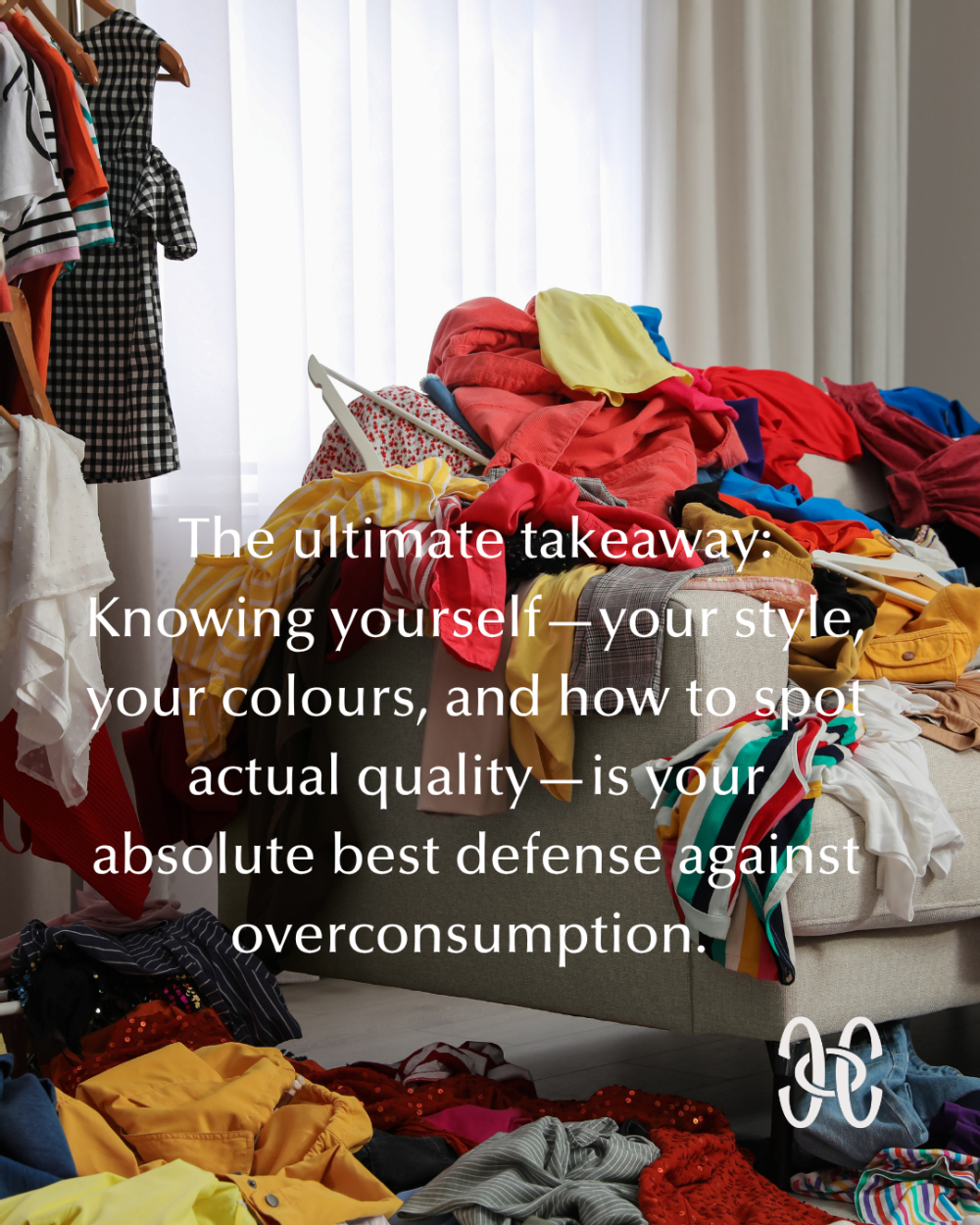
The ultimate takeaway: Knowing yourself—your style, your colours, and how to spot actual quality—is your absolute best defence against overconsumption. A sustainable wardrobe is one where 100% of the clothes actually get worn. Reduce | Reuse | Recycle in that order.